Staying Strong Through an Injury When You Have EDS
How we kept our hypermobile 5-year-old strong while she was in a cast
By Kasey Gandham, CPT, Director of Strength and Rehabilitation at Hypermobility Medicine
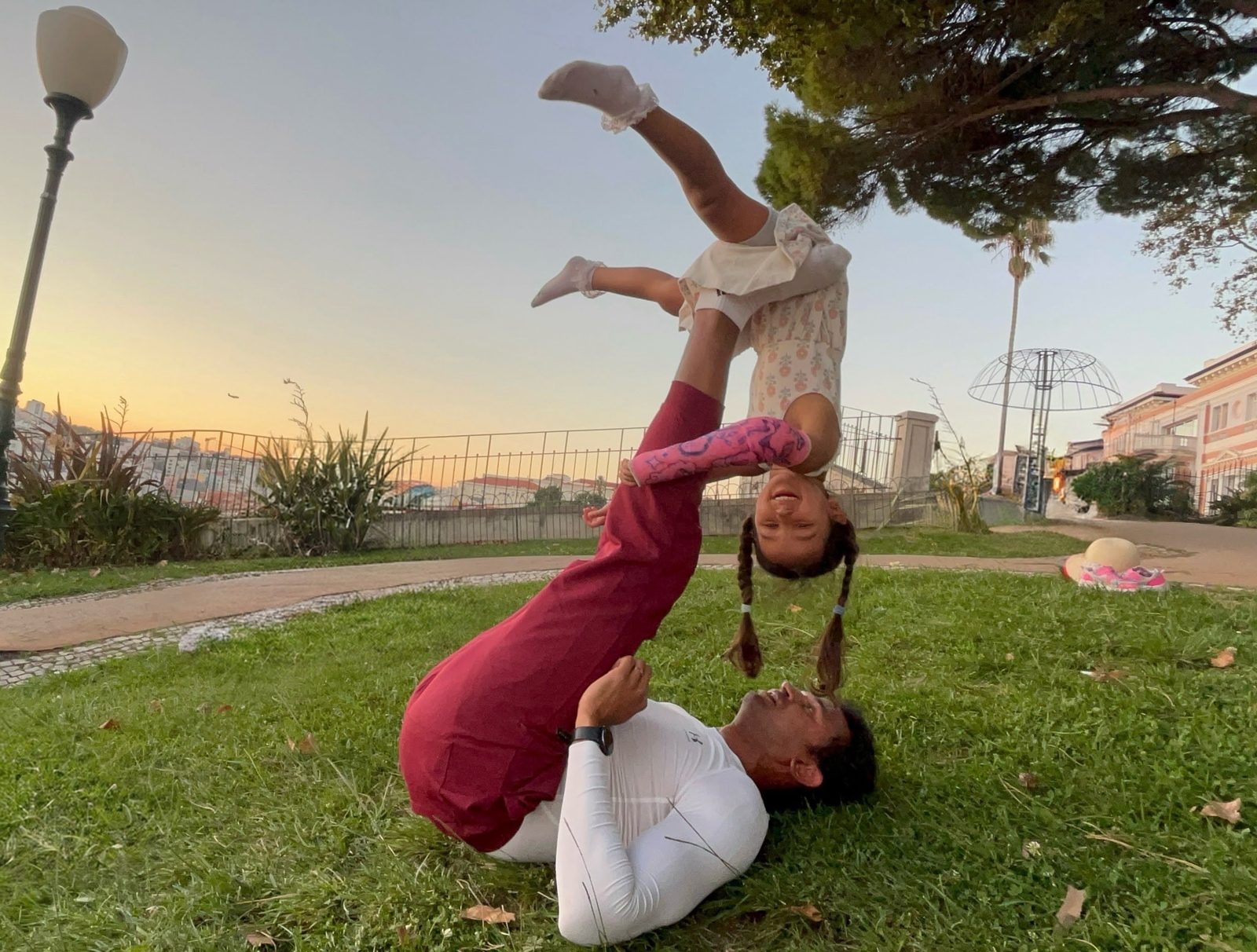
Tala, 5, in her pink cast at a park in Lisbon.
In August, my daughter’s whole class tumbled into each other going up the camp stairs. Tala is 5 and has hEDS, like me. She came out of the pile with a broken arm and two months in a cast.
My first worry wasn't the bone. Bones heal. What worried me was everything around it. Kids like Tala lean on muscle for the stability their ligaments don't give them, and two months of sitting still can undo a lot of that strength. For a hypermobile kid, losing it can mean looser joints, more falls, and more pain.
So we decided early that the cast would take one arm out of play, not the rest of her. She had to stop gymnastics, but spent extra time in ballet, we introduced acroyoga, and we worked around the arm.
A few weeks later, we were in a park in Lisbon at sunset. I was lying in the grass, and Tala was balanced on my feet with her pink cast sticking out. She rolled over my head, threw up a gymnastics salute, and yelled, "Again! Again!"
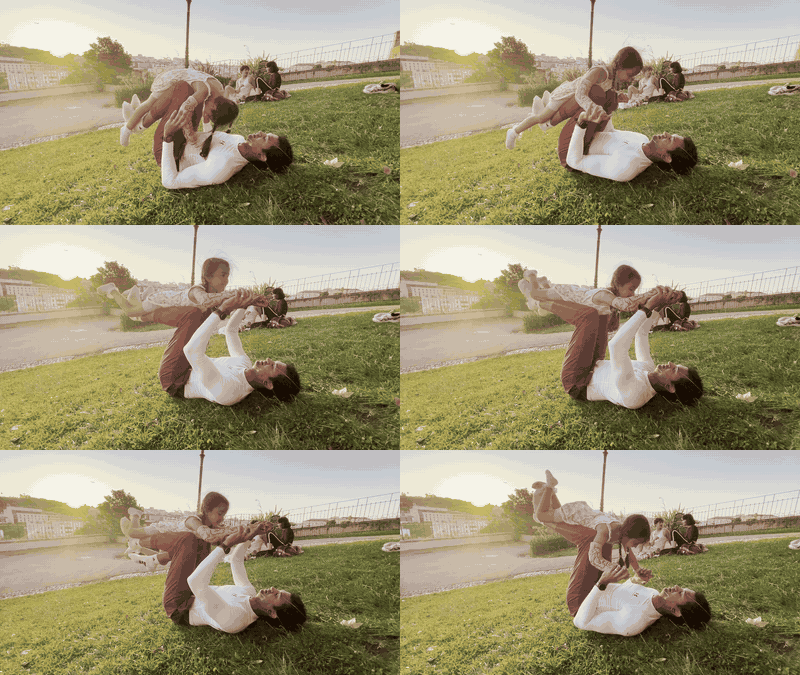
This is what working around an injury looked like for us.
That's the part I wanted you to see. She wasn't doing rehab. She was playing. But there's a lot of coaching built into that play, so here's what's actually going on.
Breaking down the session
1. The position does the coaching
In the straddle on my feet, her ribs stay down instead of flaring out, and her rib cage and pelvis stay connected in one rigid line. I don't have to cue that. Where my feet sit makes her nervous system organize it on its own, because if her ribs flare and her pelvis dumps forward into an anterior tilt, she simply can't hold the position.
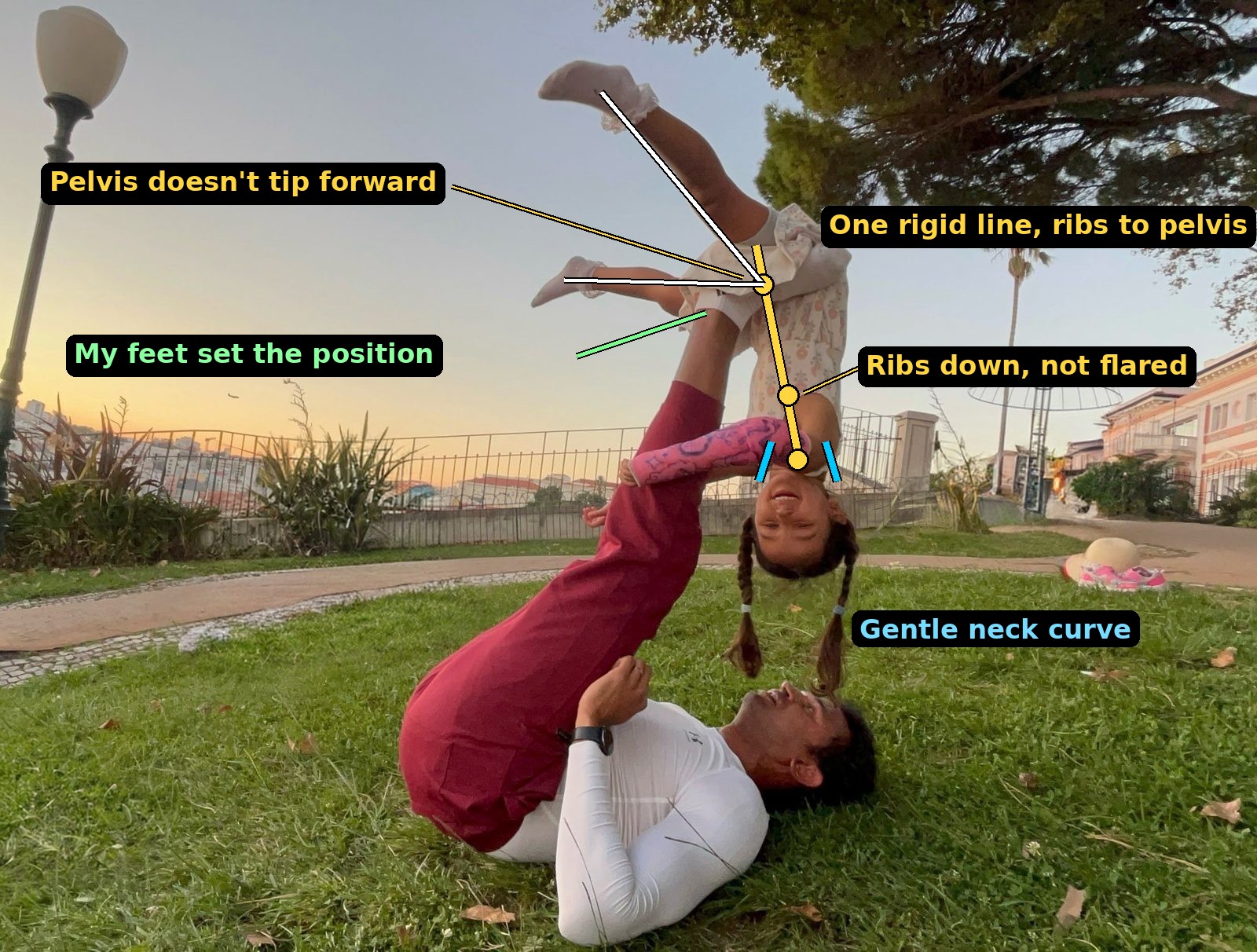
Ribs down, pelvis connected, neck in a gentle curve, all while upside down.
2. A gentle curve in her neck
I want Tala to keep a gentle, natural curve in her neck in every position: standing, sitting, lying on her stomach, lying on her back, and even upside down. It shouldn't be cranked back, tucked hard, or left hanging. With hEDS, the neck can drift past where it should go without her feeling it, so we practice finding that same easy curve wherever her body ends up. In the photo above, she's upside down on my feet and it's still there. She is mindful about it.
3. A long line without hinging at the SI joint
When she stretches out long over my hands, the straight legs aren't the point. Her rib cage and pelvis stay connected, so her whole trunk holds together while her legs extend. She doesn't hinge at the SI joint, where the pelvis meets the base of the spine. Many of us with hEDS have SI joint instability and pain around the sacrum. Tala has had it, and so have I, so we train her to keep that connection even when her body is stretched long.
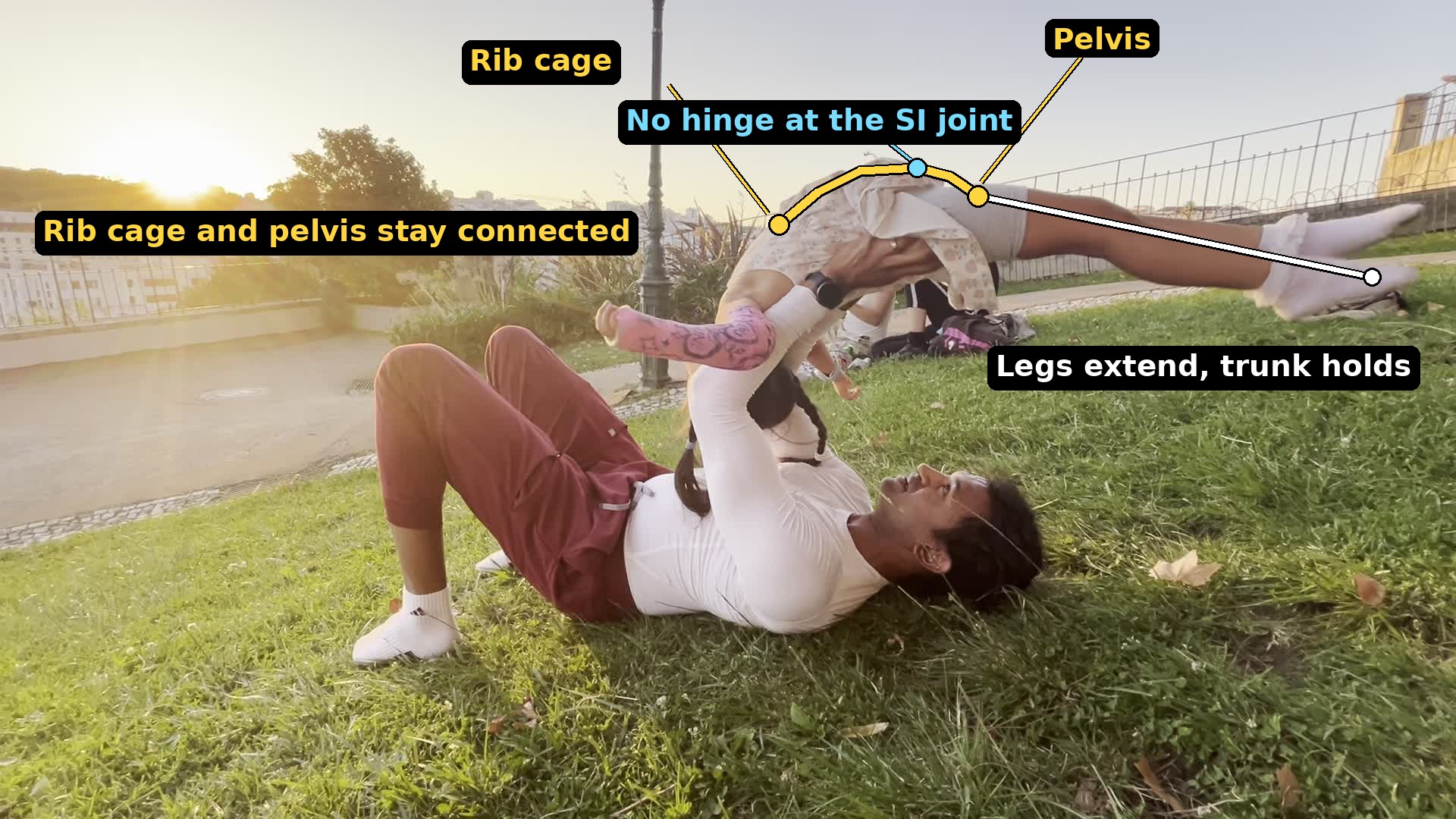
Stretched long, with her rib cage and pelvis still working as one.
4. Short cues, one at a time
You can hear how we coach it in the full clip on YouTube: "Zip your ribs in." "Legs straight, point those toes." We give one short cue at a time, so she can feel what we mean instead of having to think about it.
What I keep relearning
There's almost always a way to work around an injury, even if it's only a little. The cast took one arm off the table. It didn't take the rest of her.
If you're an adult with hEDS, the same ideas apply to you: ribs and pelvis working together, and a neck that keeps its easy curve. This is our family's training, built for Tala over years, so please don't copy it with your own child. But take the question with you. The next time an injury or a flare takes something off the table, don't just ask what you've lost. Ask what you can still keep strong, and double down there.
If you're working around pain or a flare and want help figuring out what you can still keep strong, we can build that into your treatment plan. If you're already a patient, bring it up at your next visit. If not, reach us on the contact page. Just tell us what you're working around.
Kasey
Kasey Gandham, CPT, is Director of Strength and Rehabilitation at Hypermobility Medicine. He writes about building joint stability in a hypermobile body and managing his own hEDS, MCAS and dysautonomia as a father of two young kids.
About Hypermobility Medicine
Gandham Family Hypermobility Medicine was built by a family with three generations living with hEDS. The practice is led by medical director Dr. Rani Gandham, Kasey's mom. We treat hypermobility and the conditions that often come with it, including POTS and dysautonomia, MCAS, GI issues and chronic pain, in one coordinated plan under one roof. We also are experienced hypermobile rehab practitioners. Telehealth from anywhere in New York or Connecticut (you need to be in one of those states during each visit), or in person at our Slingerlands office near Albany, New York.